FUE vs DHI: Which Hair Transplant Method Fits You?
Quick answer
FUE and DHI remove grafts the same way, one by one from the back and sides of your head. The difference is how the grafts are placed: with fine tweezers into small openings in FUE, or with a pen-like implanter in DHI. Both can give good results, and your doctor's experience matters more than the method.
Key Takeaways
Grafts are removed the same way in both methods. Only the way they're placed is different.
Research hasn't shown that one method grows hair better than the other.
Shaving, the size of the area and your hair type can make one method a better fit for you.
Your doctor's experience with the method matters most.
What's the Difference Between FUE and DHI?
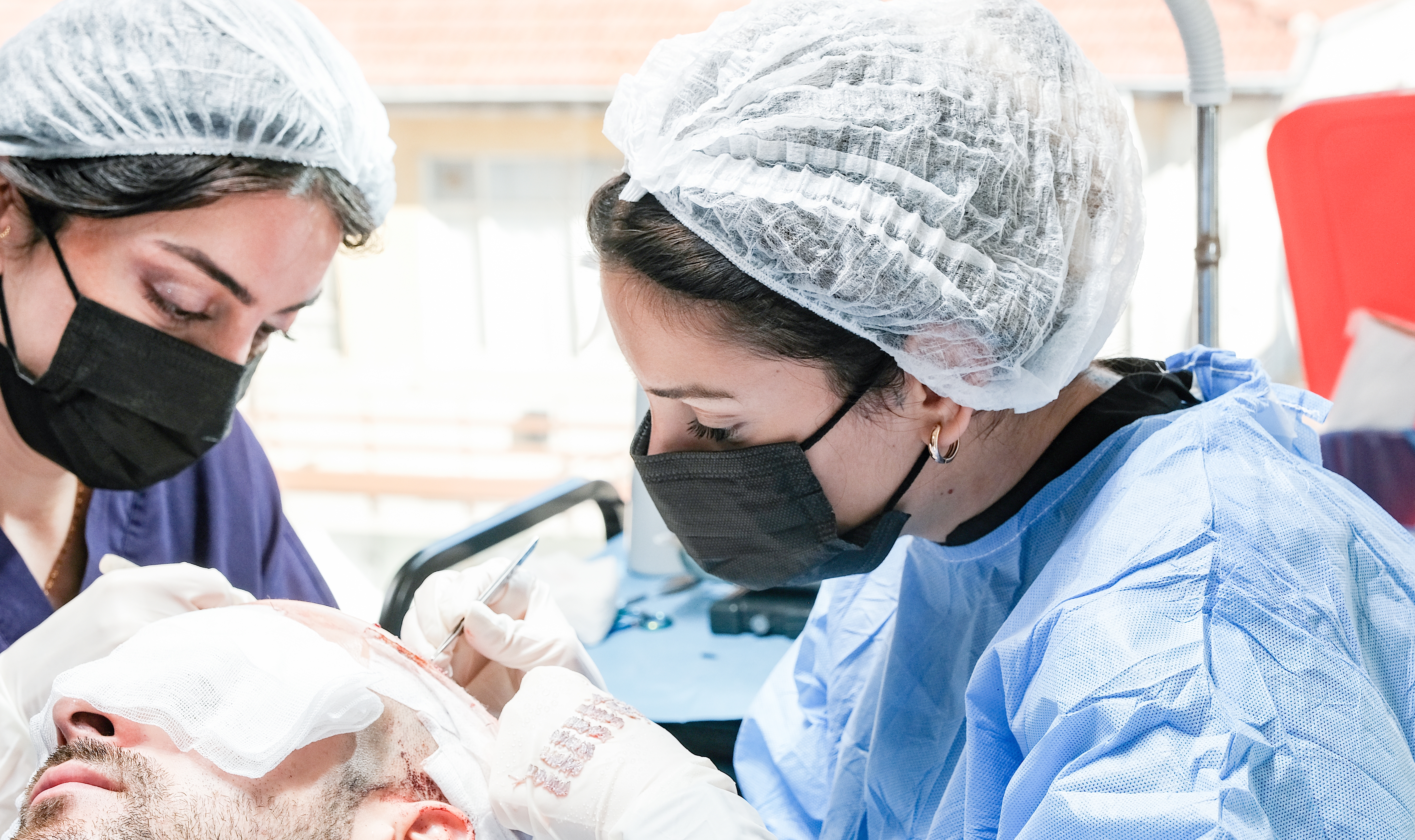
FUE (follicular unit excision) is a way of removing hair follicles one by one from your donor area, usually the back and sides of your head, with a tiny round punch. In FUE, small openings are made in the thinning area, and the grafts are then placed into them with fine tweezers.
DHI is a way of placing grafts within FUE: grafts are removed the same way, and placed with an implanter pen. The pen opens the skin and places each graft in one move. DHI compares the steps side by side.
Does One Method Give Better Results?
Both methods can give good results. Research comparing them is limited, and no large study has shown that one grows hair better than the other. What matters most is your doctor's experience with the method they use.
Grafts are removed
The same way
Grafts are placed
With tweezers or a pen
Things to Consider When Choosing
Shaving: If you'd like to avoid shaving, ask whether your plan allows it. Sessions without shaving usually take longer. The size of the area: Larger areas may need two or more sessions, whichever method you choose.
Curly or afro-textured hair: Curly hair can make removing grafts harder, so look for a doctor experienced with your hair type. Cost: The pens used in DHI are more expensive tools, which can affect the price. Compare quotes for the same number of grafts.
What Matters More Than the Method
Whichever method you choose, a good result depends on how carefully your transplant is planned and done.
Careful handling of the grafts: Grafts need to be handled gently and kept moist, and they shouldn't stay outside the body for too long.
Protecting your donor area: Your donor hair is limited, so a good plan takes only part of it in each session and keeps some for the future.
A natural hairline: A good doctor plans a hairline that suits your face and your age.
Experience: Unnatural results most often come from poor planning or a lack of experience, not from the method itself.
Questions to Ask Your Doctor
- Which method do you recommend for me, and why?
- How often do you use this method?
- Will my plan need shaving?
- How many grafts and sessions do you expect I'll need?
- What results are realistic for me?
FUE vs DHI: Frequently Asked Questions
Does DHI leave fewer scars than FUE?
Not as far as research shows. In both methods, grafts are removed the same way, which leaves small round scars in the donor area. They're usually small and hidden by your hair. Ask your doctor what scarring to expect for your plan.
Do FUE and DHI take the same time to show results?
Yes. With either method, transplanted hair usually falls out in the first weeks and then starts to grow again. Most people see results after 6 to 9 months, and for some it takes about 12 months.
Sources
A Guide to Hair Transplant Surgery
International Society of Hair Restoration Surgery · ishrs.org
Why FUE Is So Confusing
International Society of Hair Restoration Surgery, 2024 · ishrs.org
Hair transplant
NHS, 2023 · nhs.uk
Hair transplant
American Academy of Dermatology · aad.org
Hair Transplantation
StatPearls, National Library of Medicine, 2025 · ncbi.nlm.nih.gov
Nonshaven FUE: Personal Experience
Annals of Plastic Surgery, 2019 · pmc.ncbi.nlm.nih.gov
A Practical Guide to Hair Graft Placement Using the Sharp Implanter Method
Clinical, Cosmetic and Investigational Dermatology, 2023 · pmc.ncbi.nlm.nih.gov
Advancements in Graft Placement Techniques
Facial Plastic Surgery, 2024 · pubmed.ncbi.nlm.nih.gov
Complications in Follicular Unit Excision
Frontiers in Medicine, 2026 · pmc.ncbi.nlm.nih.gov
Controversies in Hair Transplantation
Journal of Cutaneous and Aesthetic Surgery, 2018 · pmc.ncbi.nlm.nih.gov
This guide is for general information and is not medical advice. Talk to a licensed doctor about your situation.
 Written by