PLASTIC SURGERY · BREAST
Breast Augmentation
Also known as: breast implants · boob job · augmentation mammaplasty
Breast augmentation uses implants to make the breasts larger or fuller, or to restore volume lost after pregnancy or weight loss. Most patients stay 7 to 10 days before flying home. Our coordinator helps you compare verified surgeons.
- Procedure time1 to 2 hours
- Hospital stay1 night
- Back to work1 to 2 weeks
- Time abroad7 to 10 days
- Fly home afterDay 7 to 10
Breast Augmentation Clinics
These hospitals and clinics perform breast augmentation and are listed on Hollywood Patient Care. Verified clinics have passed our checks.
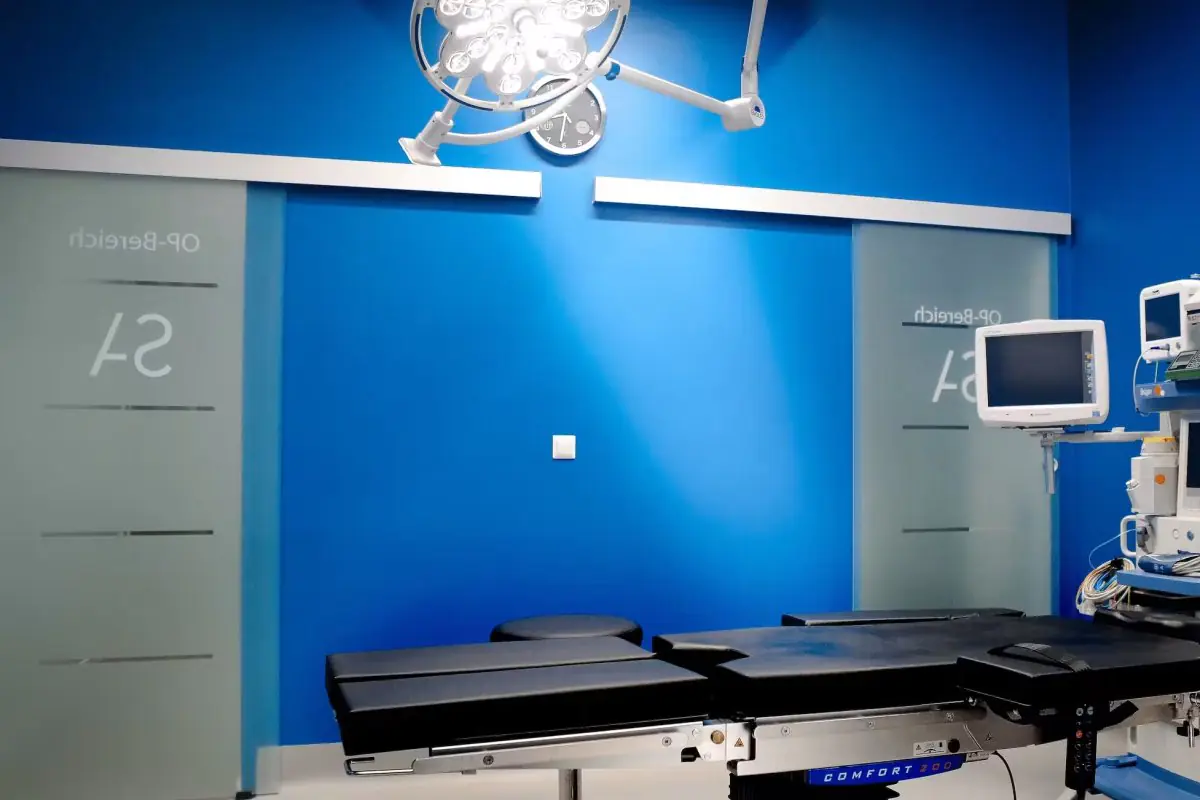
Is Breast Augmentation Safe?
Breast augmentation is one of the most common cosmetic operations in the world, and most patients recover without serious problems. Your safety depends far more on the surgeon, the hospital and your travel plan than on the country.
Safety Depends on Four Things
Far more than on the country you choose.
The Surgeon
A qualified plastic surgeon who performs breast augmentation regularly.
The Hospital
Licensed by the country's health authority.
The Implants
A known brand and model, confirmed in writing, with an implant card for you to keep.
The Plan
Enough days abroad for a check-up before you fly, and a clear plan for follow-up at home.
Possible Risks
As with any surgery, breast augmentation has risks. Your surgeon should explain them before you agree to the operation.
- Capsular contracture: Scar tissue tightens around the implant. In published studies, about 2% under the muscle and about 7% over it
- Bleeding or fluid build-up around the implant, in about 1 in 100 patients
- Infection, in about 1 in 100 patients or fewer
- Changes in nipple or breast feeling
- Implant rupture or leak, which can happen at any time. A silicone rupture is often "silent"
- A result you're not happy with, for example the size or position, which may need a second surgery
- Blood clots, a risk linked to long flights after any surgery
- A rare type of lymphoma (BIA-ALCL), mostly linked to textured implants
Warning Signs After You Get Home
Contact your surgeon or a local doctor promptly if you have:
- Swelling, pain or redness in one breast that gets worse instead of better
- A fever over 101°F (38.3°C), or fluid or pus from a wound
- A breast that suddenly changes shape or size
IN AN EMERGENCY
Get emergency medical help right away if you have chest pain, sudden shortness of breath, or a painful, swollen leg. These can be signs of a blood clot.
Who Is a Good Candidate for Breast Augmentation?
You may be a good candidate if you are in good general health, your breasts have finished developing, you are not pregnant or breastfeeding, and you have clear, realistic goals.
Good Candidates
You meet the age rules for implants. In the US, the FDA approves saline implants for augmentation from age 18 and silicone implants from age 22. Ask your surgeon which rules the clinic follows.
You are healthy overall. Conditions that affect healing, such as diabetes, need to be under control.
You are not pregnant or breastfeeding. Talk to your surgeon about timing if you plan to have children.
You don't smoke, or you can stop for several weeks before and after surgery. Smoking slows healing.
You know what you want to change, for example size, fullness, or the difference between your two breasts.
You're making the choice for yourself.
Implants alone don't lift sagging breasts. If your breasts sag noticeably, your surgeon may suggest a breast lift, on its own or together with implants.
Your surgeon makes the final decision after examining you. Before you book anything, your coordinator can arrange an online consultation with a verified surgeon.
Breast Implant Options: Which One Fits Your Goals?
There is no single best implant. Your surgeon recommends the type, shape and size based on your body, your skin and the look you want.
Under or over the muscle? Implants can sit under the chest muscle, partly under it (called dual plane), or over it, behind the breast tissue. In a 2026 review of 91 studies, capsular contracture was less common under the muscle. Your surgeon chooses based on how much natural tissue you have.
Where is the incision? Most surgeons use one of three places: the fold under the breast (inframammary), the edge of the areola (periareolar), or the armpit (transaxillary). Each has trade-offs for the scar and the implant type, and your surgeon explains them. The scar usually fades over months.
Silicone Implants
- How it works
- A silicone shell filled with silicone gel. Many people say it feels closer to natural breast tissue.
- Often used for
- Most first-time augmentations
- What to expect
- A rupture may cause no symptoms, so the FDA recommends regular ultrasound or MRI checks.
Saline Implants
- How it works
- A silicone shell filled with sterile salt water. It is often filled after it's placed, so the cut can be smaller.
- Often used for
- Patients who prefer a smaller cut or a leak they can see
- What to expect
- If it leaks, it deflates and the body absorbs the salt water. Some feel firmer than silicone or show rippling.
Form-Stable ("Gummy Bear") Implants
- How it works
- A thicker, more cohesive silicone gel that keeps its shape. Often teardrop-shaped, fuller at the bottom.
- Often used for
- A more sloped, natural-looking profile
- What to expect
- Needs a slightly longer cut. A shaped implant can rotate, which may need another surgery to fix.
Fat Transfer Breast Augmentation
- How it works
- Fat is taken from another part of your body by liposuction and injected into the breasts. No implant is used.
- Often used for
- A modest increase in size, for people with enough fat to spare
- What to expect
- Some of the fat is absorbed by the body, so the result can be harder to predict.
Breast Augmentation with a Lift
- How it works
- Implants add volume while a lift removes extra skin and raises the nipple.
- Often used for
- Breasts that sag or have lost volume after pregnancy or weight loss
- What to expect
- A longer operation and more scarring than augmentation alone.
How Is Breast Augmentation Performed? Procedure Steps
Breast augmentation usually takes 1 to 2 hours under general anesthesia, and most patients spend one night in the hospital. Combined surgery, such as a lift, takes longer.
Anesthesia
StartYou are given general anesthesia, so you sleep through the operation. An anesthesiologist monitors you from start to finish.
The Incision
StartThe surgeon makes a cut in the place you agreed on: under the breast, around the areola or in the armpit.
Creating the Pocket
Main partThe surgeon makes a space for the implant, under the muscle, partly under it, or over it.
Placing the Implants
Main partThe implants are placed, and the surgeon checks their size and symmetry.
Closing
EndThe cuts are closed in layers, and the skin is closed with stitches, skin glue or tape. You wake up in a support bra or bandage.
Waking Up and the First Night
Day of surgeryYou wake up in the recovery room and spend the night in the hospital. The next day, you go to your hotel with medication and written instructions.
Breast Augmentation Recovery: What to Expect Day by Day
Most people go back to desk work in 1 to 2 weeks. Soreness is worst in the first 2 days, most swelling goes down within a month, and the implants settle into their final position over about 3 months.
ABROAD · WITH YOUR SURGEON · FIRST WEEK
Day 1
Night in the hospital. Your chest feels tight and sore. You wear a support bra day and night.
Days 2 to 3
Back at the hotel. Soreness starts to ease. Short walks every few hours lower the risk of blood clots.
Days 5 to 7
Check-up at the clinic. Dressings and drains, if you have them, are removed. Before a long flight, most patients wait until day 7 to 10.
BACK HOME · WEEKS TO MONTHS
Weeks 1 to 2
Many people return to desk work. Most stitches come out or dissolve.
Week 6
Usually cleared for exercise and most normal activities.
Month 3
The implants have dropped and softened into their final position for most people.
Months 6 to 12
Scars keep fading.
Timings are typical, not promised. Your surgeon gives you your own plan.
Does Breast Augmentation Hurt?
Most people describe tightness and soreness rather than sharp pain. It's worst in the first 48 hours and is usually managed with prescribed medicine. Tenderness can last a few weeks.
Do
- Wear your support bra as your surgeon tells you, day and night
- Sleep on your back with your upper body raised for the first days
- Take your medication exactly as prescribed
- Walk a little every day
- Go to your check-up before you fly
Don't
- Don't lift anything heavy for at least a month
- Don't sleep on your front or side until your surgeon says it's safe
- No heavy exercise for at least 6 weeks
- Don't drive for at least a week
- Don't smoke, swim or sunbathe until your wounds have healed
How Long Should You Stay Abroad for Breast Augmentation?
Plan to stay 7 to 10 days. The American Society of Plastic Surgeons advises waiting 5 to 7 days after breast surgery before flying, and the CDC advises waiting at least 10 days after chest surgery. Because the flight home can be long, many patients plan for the longer end, and your surgeon checks you before you travel.
7 to 10days
Plan to stay abroad until your surgeon clears you to fly.
1night
in the hospital after surgery.
Day 7
Final check-up. You receive your implant card and surgery report.
A Typical 7-Day Plan
DAY 1
Arrive
Transfer to your hotel, consultation with your surgeon, pre-op tests. You choose your implant with the surgeon.
DAY 2
Surgery
One night in the hospital.
DAY 3
Back to your hotel
Rest, with short walks.
DAYS 4 TO 6
Rest and check-up
A check-up at the clinic. Your coordinator checks in every day.
DAY 7
Final check-up
You receive your implant card and surgery report. Most patients are cleared to fly from now until day 10.
Many patients add 1 to 3 extra days as a buffer before the long flight home.
When Can You Fly Home?
Usually between day 7 and day 10, once your surgeon confirms you're fit to fly.
Flight times and entry rules depend on the country you choose. See the travel notes for each country in the comparison above, and check the entry requirements for your passport before you book.
- Get up and walk every hour or two.
- Drink plenty of water.
- Consider compression socks to lower the risk of blood clots.
- Carry your medication and documents in your hand luggage, and avoid lifting heavy bags into the overhead bin.
Back Home: Follow-Up, Scans and Your Implant Card
Before you leave, make sure you have your implant card, your surgery report in English, your medication list and your surgeon's contact details.
If you have silicone implants, plan for regular ultrasound or MRI checks at home: The FDA recommends the first 5 to 6 years after surgery, then every 2 to 3 years.
How to Choose a Breast Augmentation Surgeon
Choose the surgeon and the implant, not the package price. Look for a qualified plastic surgeon who performs breast augmentation often, can show results on bodies like yours, uses implants from a known manufacturer, and operates in a licensed hospital.
What to Check
- Specialty training and board certification in plastic surgery
- How many breast augmentations the surgeon performs each year
- Before-and-after photos of patients with a similar body shape
- The implant brand and model, and whether that model is approved in the US
- The hospital's license from the national health authority
- A written plan for follow-up and for a second surgery if needed
- A consultation with the surgeon, not only with a sales team, before you book
Questions to Ask Your Coordinator
- Who will perform my surgery from start to finish?
- Which implant type, size and position do you recommend for me, and why?
- Which implant brand and model will I get, and will I receive the implant card?
- What exactly is included in my quote?
- How will follow-up work once I'm home?
- What happens if I need another surgery?
- Has this clinic been verified, and when?
Breast Augmentation: Frequently Asked Questions
Why does breast augmentation cost less in some countries?
Running costs, wages and living costs differ from country to country, and some hospitals treat a large number of international patients. A lower price doesn't mean lower standards, but it doesn't guarantee them either. Check the surgeon, the hospital and the implant, not just the price.
Does the price include flights?
No. What the price includes varies by clinic. Your written quote lists exactly what's covered; flights are usually paid separately, along with travel insurance and any extra hotel nights.
Which implant brands do clinics use?
Clinics use implants from different manufacturers, and not every model sold outside the US is approved in the US. Ask for the brand and model in writing before you book, so you can check it.
Will I get an implant card?
You should. Ask for it before you leave the clinic. It shows the implant brand, model, size and serial or lot number. Keep it safe: if there's ever a recall or you need another surgery, your doctor will need this information.
Can I breastfeed after breast augmentation?
Many women can, but implants may slightly reduce milk supply for some. Tell your surgeon if you plan to breastfeed in the future.
Can I still have a mammogram?
Yes. Tell the technician you have implants. Extra images may be needed, because implants can make breast tissue harder to see.
Are breast implants linked to any rare conditions?
Rarely. Breast implants are linked to a rare type of lymphoma called BIA-ALCL (breast implant-associated anaplastic large cell lymphoma). It is not breast cancer. Most cases have been in people with textured implants, and it usually appears years after surgery. If you notice lasting swelling, a lump or pain around an implant, see your doctor. Some people also describe symptoms such as tiredness and joint pain, often called breast implant illness. It isn't a formal diagnosis, and doctors are still studying it.
What if I'm not happy with the size?
Give your body time: the final shape takes about 3 months. If you and your surgeon decide a change is needed, a second surgery is planned after healing. Clinic policies differ, so ask for the revision policy in writing before you book.
Can I travel alone?
Many patients do. Your coordinator arranges your transfers, and you spend the first night in the hospital. If you can, bring a companion for the first few days at the hotel, when lifting and reaching are hard.
Our Sources
Breast Augmentation
American Society of Plastic Surgeons · plasticsurgery.org
Briefing Paper: Cosmetic Surgery Tourism
American Society of Plastic Surgeons · plasticsurgery.org
Types of Breast Implants
U.S. Food and Drug Administration · fda.gov
Risks and Complications of Breast Implants
U.S. Food and Drug Administration, 2023 · fda.gov
Things to Consider Before Getting Breast Implants
U.S. Food and Drug Administration, 2023 · fda.gov
Breast Implants: Certain Labeling Recommendations to Improve Patient Communication
U.S. Food and Drug Administration, 2020 · fda.gov
Medical Device Reports of Breast Implant-Associated Anaplastic Large Cell Lymphoma
U.S. Food and Drug Administration, 2025 · fda.gov
Medical Tourism
Centers for Disease Control and Prevention, CDC Yellow Book 2026 · cdc.gov
Breast Enlargement (Implants)
NHS, 2023 · nhs.uk
Cosmetic Surgery Abroad
NHS, 2022 · nhs.uk
Breast Augmentation (Implant) Recovery
The Aesthetic Society · theaestheticsociety.org
Implant Pocket Plane Selection in Primary Breast Augmentation: A Meta-Analysis and Systematic Review of Complication Profiles
Aesthetic Plastic Surgery, 2026 · pmc.ncbi.nlm.nih.gov
Capsular Contracture After Breast Augmentation: A Systematic Review and Meta-Analysis
Aesthetic Surgery Journal Open Forum, 2025 · pmc.ncbi.nlm.nih.gov