Hair Transplant · Technique

What Is FUE? The Technique Explained

Also known as: follicular unit extraction (or excision)

FUE (follicular unit extraction) removes hair follicles one by one from the back of your head and places them into thinning areas, under local anesthesia. This page breaks down how the technique actually works, how it compares to DHI and Sapphire FUE, and who tends to be a good candidate.

Typical session: 6–8 hours, under local anesthesia

Anesthesia

Local, you’re awake

Graft removal

One by one

Typical session

6–8 hours

Donor scarring

Tiny round dots

How it compares

FUE vs. DHI vs. Sapphire FUE

All three remove grafts the same way, one follicle at a time. They differ in how the openings for the new hairs are made and how the grafts are placed.

FUE

This page
Removing grafts
One by one with a tiny punch (0.7–1.2 mm)
Making the openings
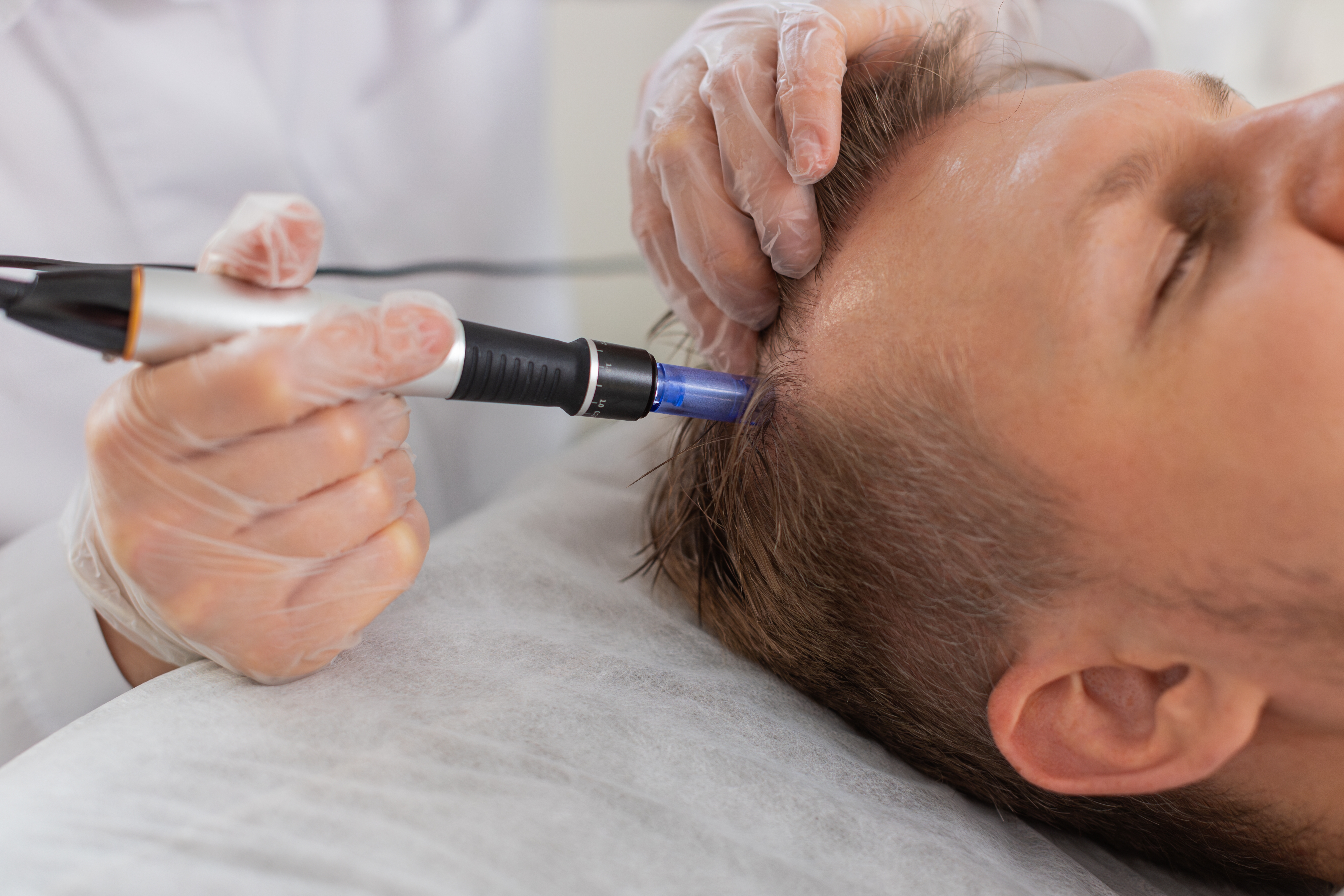
The surgeon makes small channels with a fine steel blade
Placing the grafts
Fine forceps
Shaving
Usually needed
Often chosen for
Larger areas, most hair loss patterns

DHI

Removing grafts
Same as FUE
Making the openings
No separate step: a pen-like implanter opens and places in one move
Placing the grafts
Implanter pen (Choi pen)
Shaving
Often possible with less shaving
Often chosen for
Dense work in smaller areas, less shaving

Sapphire FUE

Removing grafts
Same as FUE
Making the openings
Channels made with a sapphire blade
Placing the grafts
Fine forceps
Shaving
Usually needed
Often chosen for
Same uses as FUE

No large, well-designed study shows that one of these techniques reliably gives better growth than the others. The right choice depends on your hair, your donor area, and your surgeon’s experience with it.

Who it suits

Who is a good candidate for FUE?

FUE suits most men, and some women, whose hair loss has settled into a stable pattern and who have enough healthy hair at the back and sides of the head to move.

FUE may suit you if

Your hair loss is stable or predictable

If you’re still losing hair quickly, surgeons often suggest medication first.

You have enough donor hair

The donor area can give only a limited number of grafts over your lifetime.

You’re not too young

Most surgeons set a minimum age, on average 22, according to a 2025 surgeon survey.

Your goals match your donor supply

With very advanced hair loss, FUE alone may not cover the whole top of the head.

Women with a predictable pattern of thinning can be good candidates too

Step by step

How is FUE performed?

An FUE session usually takes 6 to 8 hours under local anesthesia. You’re awake, and you go back to your hotel the same day.

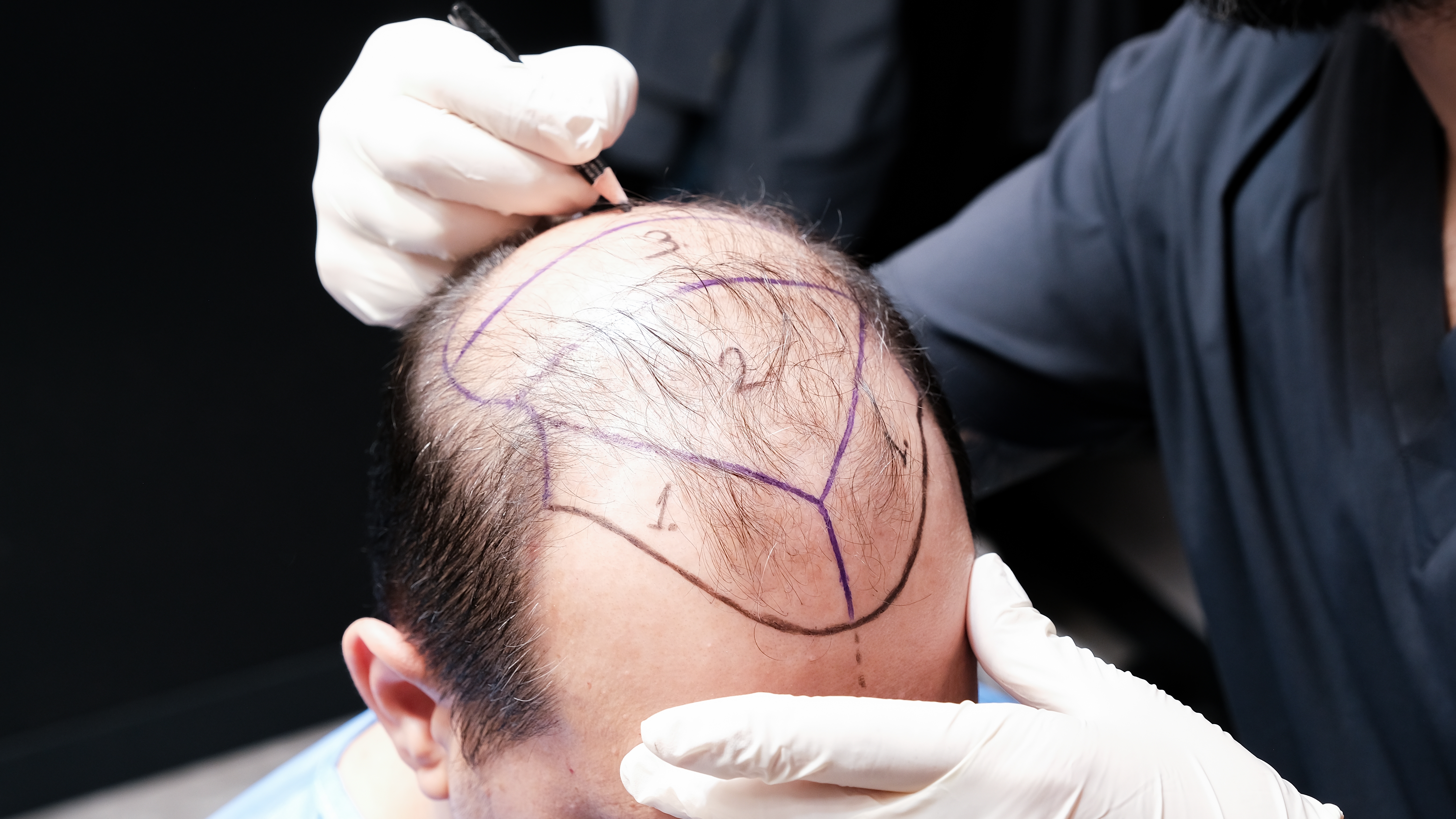
Hairline design
Step 1 of 7Hairline design

The surgeon examines your scalp, confirms the graft plan and draws your new hairline.

When · Before surgeryWho · Surgeon
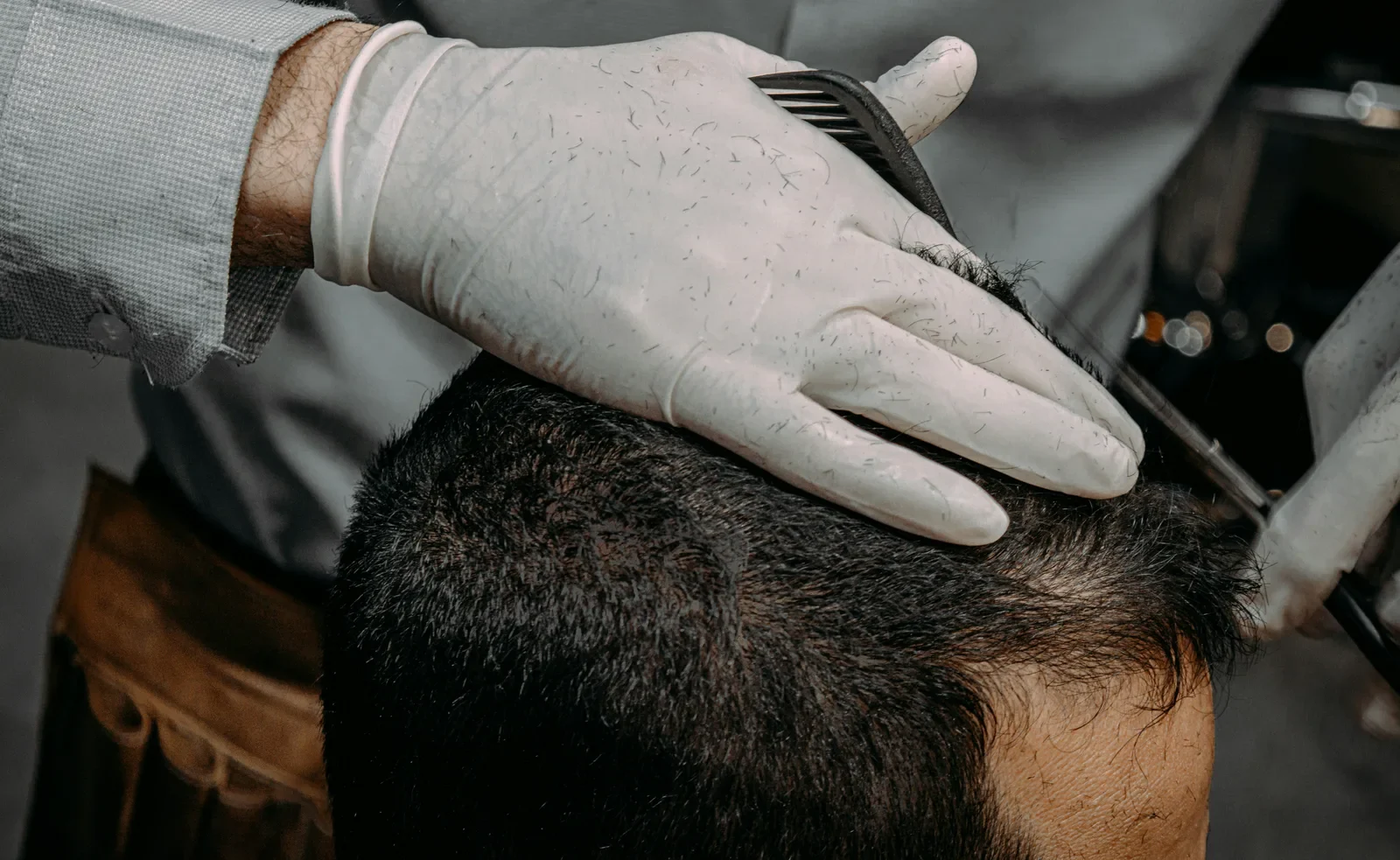
Shaving and anesthesia
Step 2 of 7Shaving and anesthesia

The donor area, and often the recipient area, is shaved. Local anesthetic numbs the scalp.

When · Before surgeryWho · Surgeon, with the team
Removing the grafts
Step 3 of 7Removing the grafts

Follicles are removed one by one from the back and sides of your head with a tiny punch.

When · About 2–2.5 hoursWho · Surgeon
Sorting the grafts
Step 4 of 7Sorting the grafts

Grafts are counted, sorted by number of hairs and kept in a cooled solution.

When · During removalWho · Trained team, checked by the surgeon
Opening the channels
Step 5 of 7Opening the channels

Small openings are made where the new hair will grow. This sets the angle, direction and density.

When · About 40–90 minutesWho · Surgeon
Placing the grafts
Step 6 of 7Placing the grafts

Grafts are placed into the channels with fine forceps.

When · About 2–3.5 hoursWho · Surgeon, or team under the surgeon’s direct supervision
Bandage and rest
Step 7 of 7Bandage and rest

The donor area is dressed and you get written aftercare instructions.

When · End of the dayWho · Team

How many grafts?

2,000–4,000

grafts for most patients

Most patients need between 2,000 and 4,000 grafts, depending on how large the thinning area is and how dense your donor hair is. Your surgeon estimates the number from your photos and confirms it at the consultation.

  • Each graft holds 1 to 4 hairs, so the graft count is not the same as the number of hairs.
  • Your donor area is limited. Taking too many grafts can leave the back of your head visibly thin, and this can’t be undone.
  • Be careful with ‘unlimited grafts’ offers. A safe graft count is planned around your donor area, not your package.

The donor area: is FUE scarless?

No. FUE leaves tiny round scars in the donor area, one for each graft. They’re usually hard to see once the hair grows past a short buzz cut, but they can show with a very short shave. Taking too many grafts can make the donor area look thin.

FUE Recovery and Results

Most people go back to desk work within 3 to 5 days. The transplanted hairs usually fall out in the first weeks, which is normal, and new hair starts to grow around month 3 to 4.

  1. Days 1 to 3Your scalp feels tender and tight. Mild swelling around the forehead is common and fades within a few days.
  2. Day 7Most swelling is gone. Tiny scabs cover each graft, and your clinic shows you how to wash your scalp gently.
  3. Days 10 to 14The scabs fall off on their own.
  4. Weeks 2 to 8The transplanted hairs fall out. This is normal shedding, not a failed transplant.
  5. Months 3 to 4New, finer hair starts to grow.
  6. Month 6Most people see a clear difference in thickness.
  7. Months 12 to 15Final density has settled for most people.

Recovery Dos and Don’ts

Do

  • Sleep with your head slightly raised for the first few nights
  • Take your medication exactly as prescribed
  • Wash your scalp gently, exactly as your clinic shows you
  • Wear loose, button-up shirts that don’t pass over your head
  • Go to your check-up before you fly home

Don’t

  • Don’t touch or scratch the grafts in the first week
  • Don’t swim, use a sauna or spend time in direct sun
  • Don’t exercise hard for at least 2 weeks
  • Don’t drink alcohol or smoke while your scalp heals
  • Don’t pick at scabs. Let them fall off on their own.

Is Recovery Painful?

Most people feel mild tightness or itching rather than sharp pain once the local anesthesia wears off. Prescribed medicine usually keeps you comfortable, and it eases within the first few days.

Timings are typical, not promised. Your surgeon gives you your own plan.

FAQ

FUE technique: frequently asked questions

Does FUE hurt?

You're awake, but your scalp is numb. The anesthetic injections sting for a few minutes. After that, most people feel pressure rather than pain.

Do I have to shave my head?

The donor area is usually shaved, and often the thinning area too. Some clinics offer unshaven or partly shaven FUE for smaller sessions, which takes longer.

FUE or FUT?

FUT removes a thin strip of scalp and leaves a line scar. FUE removes grafts one by one and leaves tiny dot scars. FUE is the more common method today.

Is FUE permanent?

Transplanted hair comes from the back of the head, which is usually resistant to hair loss, so it tends to last. Your other hair can keep thinning, which is why some people use medication or have a second session later.

When can I cut or color my hair again?

Most surgeons allow a gentle trim after about 3 to 4 weeks, and hair color after about 6 to 8 weeks, once your scalp has healed. Ask your surgeon for your own timeline.

What if I need a second session?

Some people with extensive hair loss plan a second session for more density, usually at least 8 to 12 months after the first. Ask the clinic about its policy on repeat sessions before you book.

References

Sources

  • Guide to FUE Hair Transplant: Benefits, Process & Recovery

    International Society of Hair Restoration Surgery · ishrs.org

  • Popular Hair Restoration Technique Updates Name to Reflect Surgical Nature of Procedure

    International Society of Hair Restoration Surgery, 2018 · ishrs.org

  • Follicular Unit Transplantation (FUT)

    International Society of Hair Restoration Surgery · ishrs.org

  • A Guide to Hair Transplant for Women

    International Society of Hair Restoration Surgery · ishrs.org

  • Using the follicular unit extraction technique in treatment of male androgenetic alopecia

    BMC Surgery, 2024 · doi.org

  • Complications in follicular unit excision hair transplantation

    Frontiers in Medicine, 2026 · pmc.ncbi.nlm.nih.gov

  • Advancements in Graft Placement Techniques

    Facial Plastic Surgery, 2023 · doi.org

What are you considering?

Pick the closest one. You can change your mind later.

What are you considering?

Please choose one to continue.

A little about your plans

This helps your coordinator come back with something useful.

Tell us your country.

When would you like to travel?

Pick the closest timing.

How can we reach you?

A real coordinator will reply. We never share your details with clinics without asking you first.

Please add your name.

Best way to reach you

Include your country code.

Include your country code.

Talk to a coordinator

Step {n} of {total} · {name}

Treatment

Details

Contact

Free and with no obligation

Continue

Back

Sending…

Close

Optional

We couldn’t send that just now. Please try again, or message us on WhatsApp.

Thanks{name}. We’ve got it.

A coordinator will follow up by {via}, usually within one business day. No payment or commitment is needed.

WhatsApp

email

phone

Interested in

Travelling

From